Why Waste Lithium Batteries Must Be Stored in Special Explosion-Proof Battery Storage Boxes
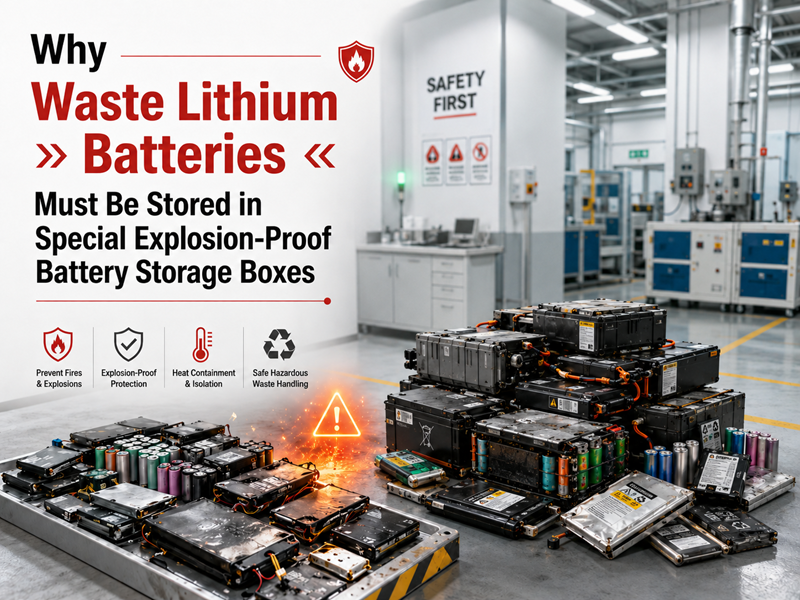
Many waste handlers, recyclers, and logistics operators hold a dangerous misconception: dead, discarded, or visually intact lithium-ion batteries are harmless once drained of power. This misunderstanding leads to improper stacking in regular cabinets, plastic bins, or open warehouses—creating hidden ticking fire bombs that threaten staff safety, destroy facilities, and trigger costly regulatory penalties.
Discarded lithium batteries carry invisible, unpredictable hazards that ordinary storage solutions cannot contain. For full-cycle safety during collection, temporary storage, and transportation, dedicated explosion-proof battery boxes are not optional equipment—they are a mandatory safety baseline and legal compliance requirement for all businesses handling waste lithium cells and packs.
1. Four Hidden Catastrophic Risks of Waste Lithium Batteries
Lithium battery hazards do not disappear with low charge levels. Aging, minor physical damage, or long-term static storage can destabilize internal cell structures, leading to sudden thermal runaway with zero advance warning.
1.1 Latent Internal Short Circuits Trigger Spontaneous Thermal Runaway
As batteries age, lithium dendrites grow inside cells and pierce the insulating separator, causing invisible internal short circuits. Even light squeezing, collision with metal tools, or contact with conductive scraps can instantly create external short circuits, spiking temperatures to hundreds of degrees Celsius within seconds and igniting thermal runaway without any obvious warning signs.
1.2 Self-Sustaining Combustion Without External Oxygen
Inside every lithium cell lies flammable liquid electrolyte. When overheated, the electrolyte decomposes into highly combustible gas mixtures. Meanwhile, cathode materials release oxygen autonomously at high temperatures, enabling violent self-propagating flames reaching over 800°C—standard wooden or metal storage lockers cannot block such extreme heat and jet fire outbreaks.
1.3 Delayed Spontaneous Combustion & Chain Reaction Blasts
A unique danger of waste lithium batteries is delayed ignition: a damaged cell can sit dormant for hours or even days before catching fire. A single thermal runaway battery releases massive radiant heat that spreads to adjacent units, sparking cascading explosions across entire batches. These chain blazes are extremely difficult to suppress and lead to total facility loss in most unprotected storage areas.
1.4 Toxic Corrosive Leakage & Persistent Reignition Risks
Damaged waste batteries leak corrosive electrolyte that releases toxic, irritating smoke containing hydrogen fluoride, carbon monoxide, and other hazardous compounds. Worse, lithium battery fires can re-ignite repeatedly for up to 72 hours after initial suppression. Conventional storage spaces lack sealed enclosures to trap toxic fumes or block residual heat that restarts combustion cycles.
2. Core Safety Protection Functions of Professional Explosion-Proof Battery Boxes
Engineered exclusively to counter lithium thermal runaway risks, explosion-proof storage boxes deliver multi-layered containment that regular storage units cannot match:
2.1 Heavy-Duty Physical Barrier Against Blast & Flying Debris
Thickened reinforced steel housings fully contain explosion shockwaves, ruptured cell fragments, and high-velocity jet flames generated during thermal runaway. This robust physical isolation prevents operator burns, flying debris injuries, and flame spread to surrounding inventory, equipment, or building structures.
2.2 Pressure Relief & Flame Arrestor Design to Prevent Box Rupture
Custom top-mounted vented pressure relief structures automatically release built-up internal gas pressure during battery failure. Integrated flame arrestor filters stop open flames from escaping the enclosure, eliminating the risk of the storage box splitting open and spreading fire across the workspace.
2.3 Thermal Insulation Stops Cascading Thermal Runaway
Multi-layer fire-retardant thermal insulation lines the entire inner cabinet. The sealed insulated structure maintains safe external surface temperatures even if batteries inside reach 800°C+, cutting heat transfer between separate battery storage zones and eliminating chain-reaction fires across multiple waste batteries.
2.4 Sealed Enclosure Controls Toxic Gas Pollution
Fully airtight cabinet construction traps all toxic corrosive fumes from leaking or burning batteries. Optional filtered exhaust systems safely process hazardous gas emissions before release, protecting on-site workers from chemical inhalation injuries and preventing environmental contamination from electrolyte runoff or smoke diffusion.
3. Mandatory Global Compliance Standards for Waste Lithium Battery Storage
Spent, defective, and end-of-life lithium batteries are classified as Class 9 Dangerous Goods under international hazardous goods transport rules. The UN38.3 test standard, alongside regional regulations including ADR (road), IMDG (marine), and IATA DGR (air), explicitly mandates UN-certified explosion-proof containment units for temporary storage and cross-regional transportation of waste lithium batteries.
Simple open racks, ordinary metal cabinets, plastic crates, or standard storage lockers fail to meet these regulatory requirements. Facilities caught using non-compliant storage face immediate shutdown orders, heavy fines, and full legal liability if fire, explosion, or toxic exposure incidents occur on-site.
4. Who Needs Explosion-Proof Waste Lithium Battery Storage Boxes?
This safety equipment is critical for all industry participants handling lithium battery waste:
- E-waste recycling plants and WEEE collection centers
- EV, e-bike, power tool repair and scrap yards
- Logistics warehouses storing defective lithium battery shipments
- Retail battery take-back stations and industrial waste sorting facilities
- Battery manufacturing factories with defective cell scrap storage zones
Conclusion
Waste lithium batteries present concealed, high-severity fire and explosion risks that cannot be underestimated. Their ability to self-ignite days after storage, sustain oxygen-free combustion, trigger chain blasts, and release persistent toxic fumes makes generic storage containers completely inadequate.
Purpose-built explosion-proof battery storage boxes serve as the final critical safety line for personnel, property, and regulatory compliance. With integrated blast containment, pressure relief, thermal insulation, and toxic fume control, these certified UN38.3 compliant enclosures eliminate lithium battery hazards throughout waste collection, storage, and transit workflows—preventing catastrophic fire accidents and eliminating regulatory violations for waste battery operators worldwide.
How to Determine the Right Number of Flammable Cabinets for Your Facility in Europe
Why FM Approved Safety Cabinets Matter: A Complete Guide to Fire Safety and Compliance
Related Article